
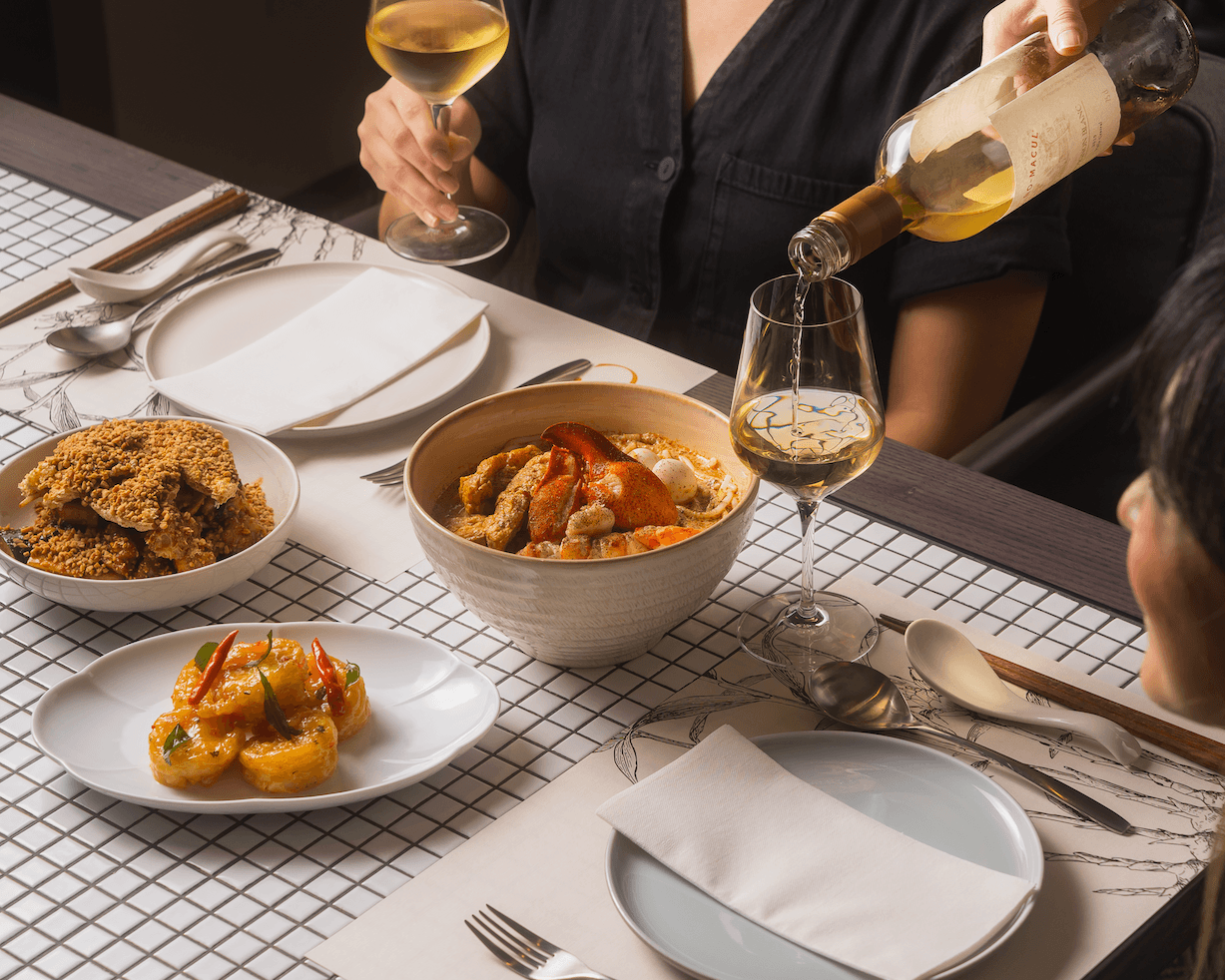
Few iconic Southeast Asian dishes can rival the beloved laksa. This soul-warming noodle soup is a harmonious blend of bold spices, creamy textures, and aromatic flavours. At Chatterbox, known for elevating Singapore’s hawker classics into fine dining experiences, we celebrate this culinary treasure with the same reverence we afford chicken rice, another local favourite. In this blog, we’ll take you on a flavourful journey through laksa’s rich history, regional variations, and signature ingredients that make it unique.
Laksa’s history is as vibrant as the dish itself. Thought to have originated from the Peranakan community, a fusion of Chinese and Malay cultures, laksa embodies the rich culinary traditions that define Southeast Asia. The name “laksa” may be derived from the Sanskrit word lakshas, meaning “many”, a nod to the dish’s complex array of ingredients.
Historical records suggest that laksa may have been born in port cities like Malacca or Penang, where traders from India, China, and the Malay Archipelago exchanged goods—and inadvertently, culinary influences. Over time, these cultural intersections gave rise to the multifaceted dish we know today.
While its exact origins remain debated, one thing is sure: laksa represents the cultural tapestry of Southeast Asia. It combines Chinese noodles, Malay spices, and Indian influences to create a dish that transcends borders.
Laksa isn’t just one dish; it’s a diverse family of recipes that vary from region to region, each offering a unique interpretation of this iconic noodle soup.
Also known as Katong laksa, this version is defined by its rich, coconut milk-based broth infused with a vibrant rempah (spice paste). The soup is creamy and slightly spicy, balanced with toppings like prawns, fish cake, cockles, and bean sprouts. In Singapore, noodles are often cut into shorter pieces, making them easy to eat with just a spoon.
Katong laksa is special in Singapore’s culinary scene. Some stalls boast recipes passed down through generations. Its bright orange hue and coconut milk fragrance are unmistakable, making it a must-try for locals and tourists alike.
Malaysia boasts several types of laksa, each with its distinct flavour profile:
Indonesian laksa often incorporates turmeric, giving the broth a vibrant yellow hue. It’s typically less creamy than its Singaporean or Malaysian counterparts, with a lighter, herb-forward flavour profile. Toppings may include shredded chicken, boiled eggs, and fried shallots. In cities like Jakarta and Bogor, laksa is often served with ketupat (compressed rice cakes), adding a delightful chewiness.
Beyond these three countries, laksa variations can be found in Thailand, Myanmar, and even Australia, where chefs put modern twists on the classic dish. From vegan-friendly versions to fusion recipes incorporating Western ingredients, laksa continues to evolve while staying true to its roots.
What makes Laksa instantly recognisable? Its ingredients, of course. Here are the elements that bring this dish to life:
At the heart of any laksa is the broth, which varies based on the region. Coconut milk provides creaminess in curry laksa, while tamarind delivers tanginess in asam laksa. Some recipes include dried shrimp, which enhances the umami flavour. Ingredients like galangal, lemongrass, and kaffir lime leaves also contribute to the broth’s depth and complexity.
Laksa typically features thick rice noodles or vermicelli, but some versions, like Laksa Johor, use unconventional options like spaghetti. The noodles act as a base, soaking up the flavourful broth. Fresh, springy noodles are essential for an authentic laksa experience.
Seafood is a common feature in laksa, with prawns, cockles, and fish cakes topping the list. Chicken and tofu are also popular, providing variety and texture. In some regions, shredded mackerel or even beef is used to add a unique twist.
Fresh herbs like Vietnamese mint and coriander add brightness, while the rempah spice paste—made from shallots, garlic, turmeric, and dried chillies—creates depth. This spice paste is the dish’s foundation, requiring skill and precision to balance the flavours perfectly.
Laksa is all about the finishing touches. Boiled eggs, crispy shallots, bean sprouts, lime wedges, and sambal chilli paste are some garnishes that elevate the dish. Each topping enhances the flavour and texture, making every bowl of laksa a masterpiece.
Laksa’s universal appeal lies in its balance of flavours and textures. It’s spicy yet creamy, tangy yet savoury, comforting in its warmth, yet bold in its complexity. Every spoonful feels like a celebration of Southeast Asia’s culinary heritage.
Additionally, laksa’s ability to adapt to different ingredients and preferences has helped it remain a beloved dish across generations and cultures. Whether enjoyed at a humble hawker stall or a five-star restaurant, laksa delivers the same satisfying experience.
Laksa is distinguished by its spice-forward broth, often enriched with coconut milk or tamarind. Its use of fresh herbs and diverse toppings also sets it apart.
While many versions of laksa are spicy, the heat level can be adjusted by reducing the amount of chilli paste. Some variations, like Indonesian laksa, are milder and more herbaceous.
Absolutely! Laksa can be adapted for vegetarians by omitting seafood or meat and using vegetable stock. Tofu and mushrooms make excellent protein substitutes.
Singapore’s Katong laksa is an excellent starting point if you’re looking to give it a try. Its creamy coconut broth is a crowd-pleaser.
While laksa is indulgent, it also contains ingredients like turmeric, ginger, and fresh herbs, known for their anti-inflammatory and immune-boosting properties.
At Chatterbox, we take pride in reimagining Singapore’s hawker classics, including laksa. While our menu is renowned for its award-winning chicken rice, our dedication to crafting authentic yet refined local dishes extends to every offering.
Whether you’re a seasoned laksa enthusiast or trying it for the first time, Chatterbox invites you to explore the flavours of Singapore in a setting that combines tradition with elegance. Book your table today and indulge in a dining experience celebrating the best local cuisine.

Opening Hours
Monday to Friday
11.30am to 4.30pm (last order at 3.45pm)
Monday to Thursday
5.30pm to 10.30pm (last order at 9.45pm)
Saturday, Sunday and Public Holiday
11am to 4.30pm (last order at 3.45pm)
Friday, Saturday and Public Holidays
5.30pm to 11pm (last order at 10pm)
Contact Details
Hilton Singapore Orchard
333 Orchard Road, #05-03
Singapore 238867
T: +65 6831 6265
M: +65 8028 3984
E: chatterbox@ouerestaurants.com


Subscribe for latest updates
Receive exclusive news access and updates