
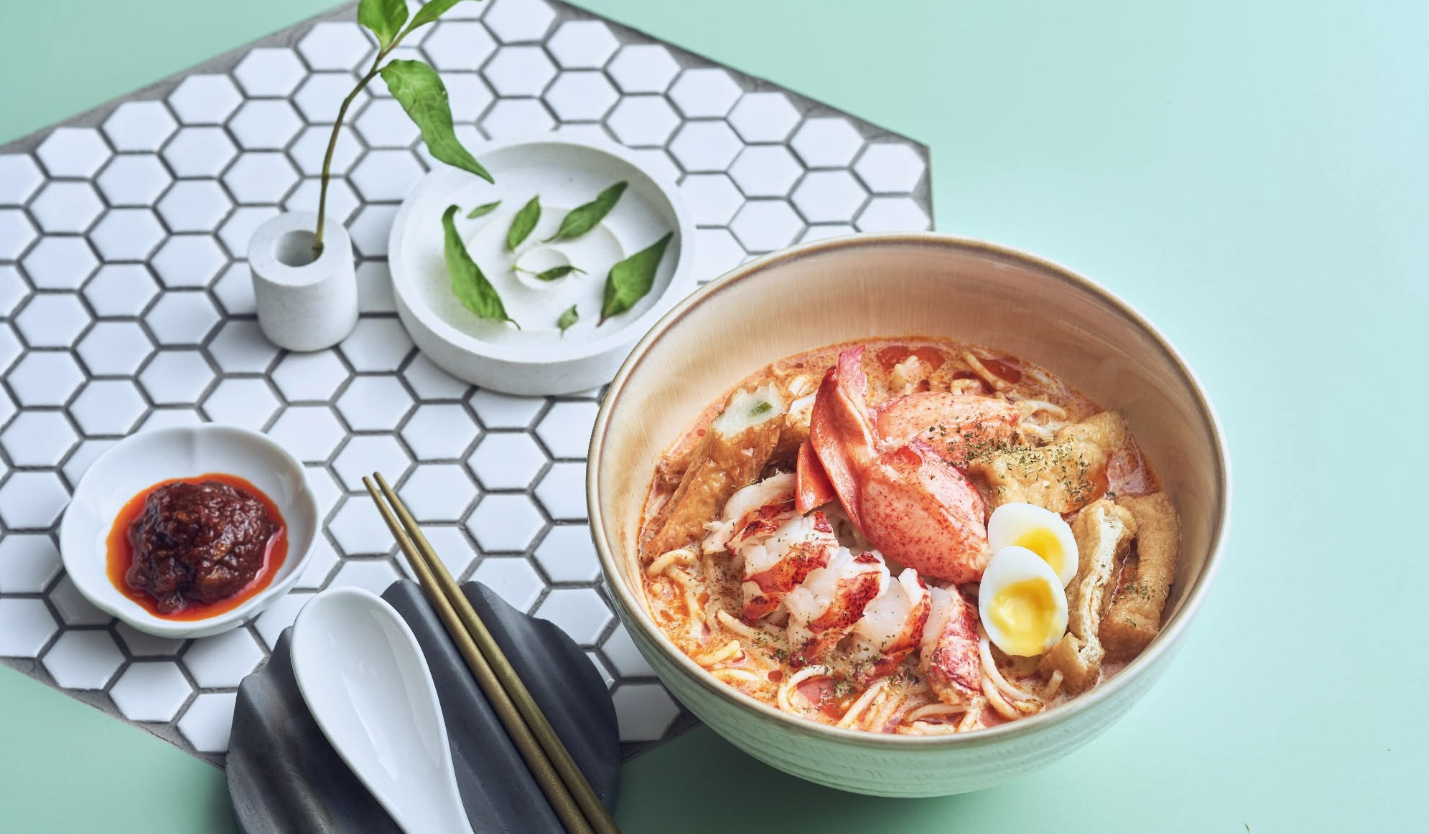
Laksa is never just soup and noodles. Ask anyone who’s grown up in Singapore, and they’ll tell you—it’s a memory. A mood. A steaming bowl of comfort after a long day or a treat that reminds you of grandma’s kitchen. And while the rich coconut-spiked broth often gets all the glory, let’s not forget what really holds the dish together: the noodles.
They matter more than you think.
At Chatterbox, where we reimagine Singapore’s hawker heritage through a refined lens, we’re often asked, “What’s the best noodle for laksa?” And the answer isn’t as straightforward as you'd expect. Because the noodle you choose can change everything, from how the broth clings to each bite, to how full (or not) you’ll feel afterwards.
So, let’s walk through it. Just honest, practical guidance on the noodles that make laksa what it is—and how to choose the right one for your next bowl.
We talk a lot about laksa paste, the creamy broth, the sambal, the toppings—but the noodles? Often overlooked. Yet they anchor the whole thing.
They soak, slurp, and stretch. They’re the middleman between the soup and your spoon. Think about it: would laksa still hit the same without them? Probably not.
Let’s start with the quiet achiever—vermicelli. Those thick strands you often find in Katong-style laksa, light as air. They soak up broth fast and slip through your chopsticks like water.
People love vermicelli because it never gets in the way. It doesn’t talk back. It simply soaks in the flavour and carries it to your mouth.
But don’t let its simplicity fool you. Cook it wrong—just one minute too long—and you’ve got a soggy mess. The trick is hot water soaking followed by a quick rinse. Keep it bouncy, never mushy.
If you like your laksa broth-forward and your bites soft and subtle, vermicelli is for you.
Bee hoon sits in that sweet spot between slippery and substantial. Still made of rice, still gluten-free, but with more bite. A little firmer. A little more satisfying to chew.
In fact, this is the noodle of choice for many laksa purists. It plays nice with bold ingredients like cockles or tofu puffs, but won’t vanish into the broth like vermicelli sometimes does.
Here’s a tip: if you’re making laksa at home and you’re unsure what to use, bee hoon’s a safe bet. It doesn’t need babysitting, and it holds up longer in hot soup.
It’s the Goldilocks noodle—just right.
Now this one stirs debate. Egg noodles—the yellow, curly kind you find in mee rebus or wonton mee—aren’t traditional in laksa. But that hasn’t stopped people from loving them.
They bring bounce. They bring flavour. They bring body. And if you like a heartier meal that leans toward indulgent, egg noodles might be your winner.
That said, they don’t soak up broth the same way rice noodles do. Instead, they hold their own—chewy and rich, never soggy. They also add a subtle eggy note that changes the profile of the dish.
So, if you’re craving a noodle that gives you something to sink your teeth into, this one’s it.
(Just skip if you’re gluten-intolerant or egg-free.)
If you’ve never tried kway teow or hor fun in your laksa, you’re missing out. These wide, flat noodles are often saved for char kway teow or beef hor fun, but they bring something special to laksa too.
They chew. They stretch. They grip onto the curry paste in all the right ways.
Not everyone’s into the thicker texture. Some say it feels too heavy. But for a rainy day, with a rich laksa broth and a generous helping of tau pok (fried tofu), thick rice noodles are a vibe.
Now and then, someone will ask: Can I make laksa low-carb? Or gluten-free and egg-free?
Yes, with a few swaps. Brown rice noodles add a nuttier flavour and firmer texture. They hold up well and still soak up broth decently. Konjac noodles, on the other hand, are all about texture. Slightly rubbery but virtually zero calories, they’re popular with keto eaters.
Not everyone loves these new-age noodles. But hey, laksa is evolving. And if it makes the dish more accessible? That’s never a bad thing.
You don’t need a culinary degree to choose the right noodle. You just need to know what kind of experience you want.
Here’s how to think about it:
Still unsure? Mix the two together. Bee hoon and yellow mee is a classic combo in Singapore. You get chew and slurp in one spoonful.
Boiling noodles seems easy—until they turn to glue. So if you’re whipping up laksa at home, remember this:
The goal? Springy, bouncy noodles with a broth that still sings.
The truth is, there’s no perfect noodle for laksa. Only the perfect one for you.
Some like it soft and subtle. Others want bounce and chew. And plenty of folks are happy to mix and match, chasing the ideal bite one noodle at a time.
What matters most is that each bowl brings joy. Comfort. Maybe a little nostalgia.
At Chatterbox, our Lobster Laksa honours the flavours we grew up with, while offering you a taste of thick and springy vermicelli noodles that hold up well against the indulgent laksa broth. With the luxurious and sweet flavour of lobster meat, be treated to a gourmet, oceanic feast cradled in a single bowl.
Hungry yet? We’ll save you a seat—if you reserve it here.

Opening Hours
Monday to Friday
11.30am to 4.30pm (last order at 3.45pm)
Monday to Thursday
5.30pm to 10.30pm (last order at 9.45pm)
Saturday, Sunday and Public Holiday
11am to 4.30pm (last order at 3.45pm)
Friday, Saturday and Public Holidays
5.30pm to 11pm (last order at 10pm)
Contact Details
Hilton Singapore Orchard
333 Orchard Road, #05-03
Singapore 238867
T: +65 6831 6265
M: +65 8028 3984
E: chatterbox@ouerestaurants.com


Subscribe for latest updates
Receive exclusive news access and updates