
Some dishes take minutes to prepare. Others demand hours, days—even lifetimes—of practice. At Chatterbox, these aren’t just meals; they’re traditions, perfected over time and presented with quiet confidence. Each bite carries the weight of history, the rhythm of the kitchen, and the hands of someone who’s done this hundreds of times before.
Here, we spotlight eight of Chatterbox’s most time-intensive dishes—the kind you don’t rush, and that rewards patience.
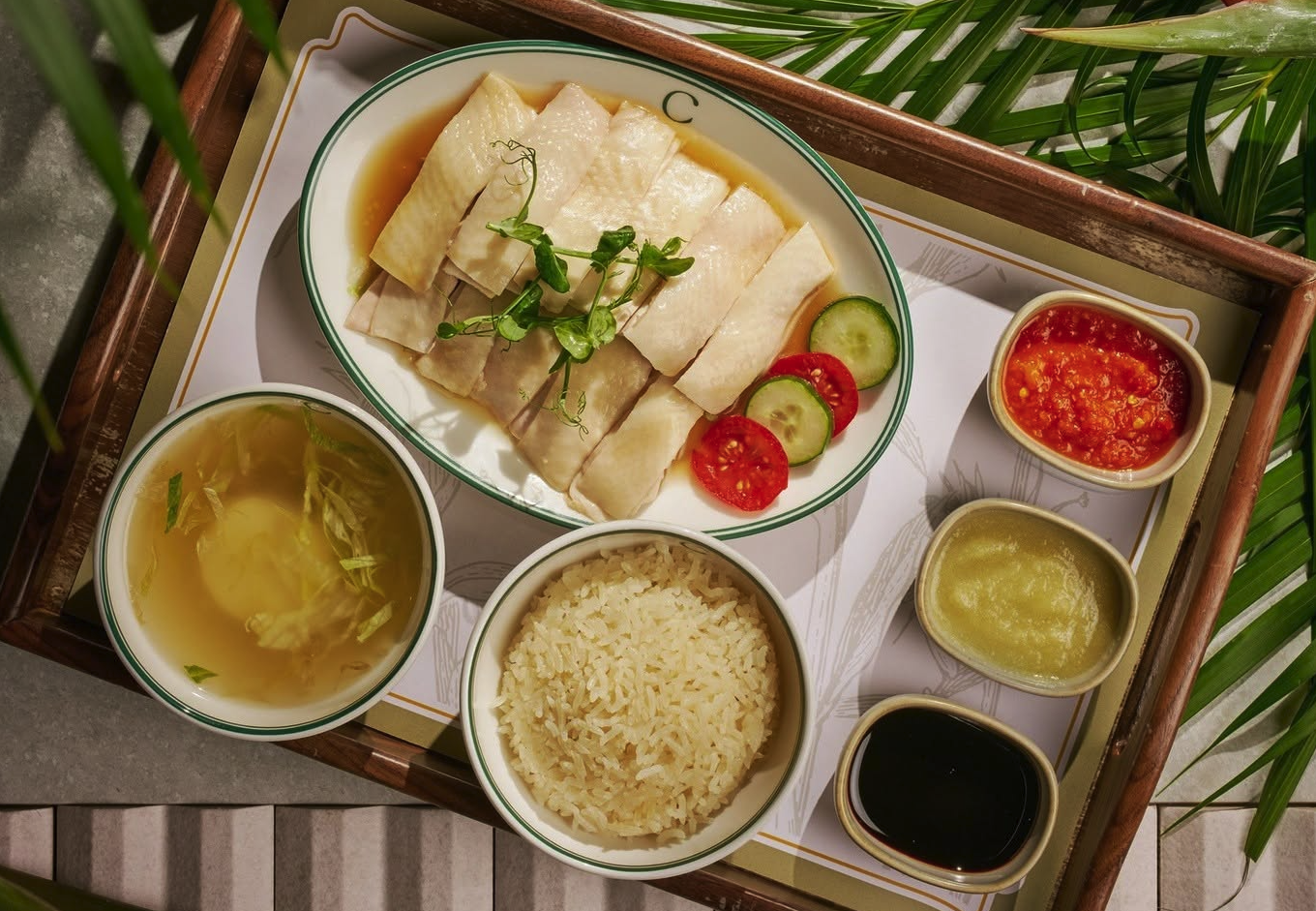
It starts with the chicken. Not just any bird, these are free-range and reared for 60 days, which is 15 days longer than average. More time means fuller flavour, plumper texture, and meat that’s naturally juicy.
Once it’s ready, the process begins: poaching the chicken in aromatic broth, steaming it gently, and then cooling it to lock in moisture. Rather than being prepared in rigid batches, it’s timed and tested, every single time. The rice isn’t just a side dish either. It’s cooked in broth with ginger, garlic, and pandan leaves until the grains are fragrant and light.
Then there’s the sauce trio: freshly ground chilli, grated ginger, and dark soy. All made in-house and balanced by taste.
This dish may look simple. But its depth is the result of decades of repetition and refinement. And it’s been Chatterbox’s signature since 1971.
Laksa is never a shortcut meal. At Chatterbox, the broth alone is a half-day affair. A spice paste, including shallots, dried chillies, lemongrass, galangal, turmeric, and shrimp paste, is fried until deeply aromatic. Then comes the coconut milk, which adds richness and rounds out the heat. It’s stirred, not left alone. Watched, not walked away from.
The noodles are blanched separately to keep their bounce. Whole Boston lobster is steamed to precise doneness, then added at the very end to keep its sweetness intact.
Characteristically, the laksa is fiery, but it is also warm, earthy, a little creamy, and intensely soulful. You don’t get there in ten minutes. It takes time, and someone who knows exactly what they’re doing.
This dish doesn’t shout. It simmers slowly and silently.
It begins with rempah, a hand-pounded mix of spices, aromatics, and toasted coconut. U.S. Angus beef short ribs are seared, then stewed with the rempah and coconut milk for hours. Not one or two, but in actuality, often more than four.
What emerges is soft, sticky, rich beef coated in a sauce that clings like caramel. It’s simultaneously bold, deep, and full of personality.
The hardest part of making rendang isn’t the cooking. It’s waiting until it’s just right, and not pulling it off the stove too early.
There are no shortcuts in a dish like this.
Sakura pork ribs are slowly cooked in a heady herbal broth made with traditional Chinese herbs. We’re talking angelica root, cinnamon, cloves, star anise, and more. It’s simmered low to extract flavour without clouding the broth.
The ribs get tender over time. Dough fritters are fried fresh and added last, so they keep their crunch when dipped.
The result is a bowl that feels like it’s been brewing all day, because it has.
It’s not just about frying noodles. The real work begins long before the wok is lit.
A seafood broth is prepared with prawn heads, pork bones, and aromatics, simmered for hours to develop the umami punch. Then the stir-frying begins—yellow noodles and bee hoon tossed in the bubbling stock, wok-fried with fresh prawns, squid, pork belly, and eggs.
The heat is high. Timing is tight. Too long and you lose the chew. Too short and it’s bland. The cook must move fast, but think slower.
Getting wok hei isn’t about turning up the flame. It’s about instinct. And lots of practice.
Making otah is a craft. Making it well takes time.
Mackerel and hand-picked snow crab meat are mixed with a spice blend that includes turmeric, lemongrass, chilli, and shallots. The paste must be smooth, containing no lumps. It’s wrapped in banana leaves, then grilled over open flame until the edges char slightly, and the centre firms up.
Every element, from the wrapping to the grilling, needs a steady hand. Overdo it and the fish dries out. Undercook it and the texture’s all wrong.
There’s a reason this street snack is rarely made from scratch at home. At Chatterbox, it’s done the traditional way, but with premium ingredients and the patience to get it right.
This dish looks simple. But look closer, and it’s a series of moving parts that come together at the last minute.
The rice is pre-cooked and left to dry slightly for that ideal stir-fry texture. The chicken wings are seasoned and deep fried. The sambal prawns are cooked separately with their own chilli paste. There’s a fried egg on top, made to order. And homemade sambal belachan is served on the side, ground fresh with torch ginger and lime.
It’s fried rice, but orchestrated. And that’s what makes the difference.
Soft, chewy, and warm—tang yuan might be a dessert, but making it is serious work.
Each ball is shaped by hand. The glutinous rice dough is kneaded until smooth and elastic, with just enough stretch to hold the peanut filling inside without splitting.
The balls are cooked gently in a ginger-infused syrup, not boiling but bubbling just enough. If the temperature’s wrong, they burst. If they’re overcooked, they turn gummy.
You can also have them dry, rolled in crushed peanuts. Either way, this dessert speaks to tradition. It’s often made to mark celebrations or reunions. At Chatterbox, it’s made fresh without a machine in sight.
There’s a certain silence that follows the first bite of something extraordinary. Not because it’s surprising, but because it confirms what you already guessed. That someone spent time on it. That it didn’t come from a packet. That it wasn’t rushed.
That’s what you taste at Chatterbox.
From the signature chicken rice to the last bite of tang yuan, the dishes on this menu aren’t just made. They’re built slowly, and carefully. With hands that know their way around old techniques and modern expectations.
So the next time you dine with us, take your time too. These dishes are waiting for you.

Opening Hours
Monday to Friday
11.30am to 4.30pm (last order at 3.45pm)
Monday to Thursday
5.30pm to 10.30pm (last order at 9.45pm)
Saturday, Sunday and Public Holiday
11am to 4.30pm (last order at 3.45pm)
Friday, Saturday and Public Holidays
5.30pm to 11pm (last order at 10pm)
Contact Details
Hilton Singapore Orchard
333 Orchard Road, #05-03
Singapore 238867
T: +65 6831 6265
M: +65 8028 3984
E: chatterbox@ouerestaurants.com


Subscribe for latest updates
Receive exclusive news access and updates