
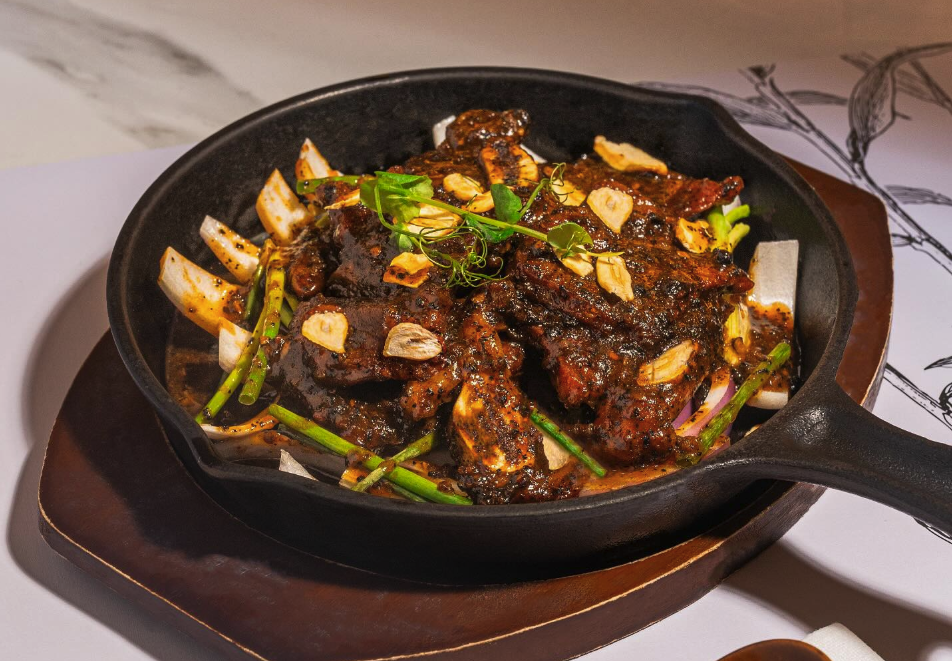
At Chatterbox, the menu offers a curated take on Southeast Asian cuisine, refined through a hotel kitchen’s precision. While most guests come for the iconic chicken rice, many are drawn in by a dish that’s darker, deeper, and slower. That’s rendang.
It didn’t originate here. But over time, rendang has earned its place at Singapore’s table.
Rendang began in West Sumatra, where the Minangkabau community prepared it not as a daily staple, but for moments that mattered. Weddings. Hari Raya. The return of a family member after a long absence.
It wasn’t quick. Cooks simmered beef in coconut milk and a dense mix of herbs and spices. Not for an hour, but for five or six, sometimes longer. It cooked until the liquid disappeared and the meat turned dark and fragrant.
The slow process wasn’t just about flavour. Rendang could last days without refrigeration. That mattered in the tropics, and especially for Minang travellers, who carried food with them as they moved across islands.
Some say the dish itself moved as they did.
Rendang doesn’t ask for many ingredients. But it does ask you to know them.
The backbone is beef, but chicken and lamb aren’t unusual anymore. Vegetarians sometimes use jackfruit, which breaks down like slow-cooked meat.
Spices are not optional. Lemongrass, turmeric, garlic, shallots, and chilli are ground together to make a paste. The coconut milk thickens it all as it cooks. Some add kerisik, which is toasted grated coconut, near the end for a nutty aroma and a bit of texture.
Done properly, the final dish isn’t wet. It’s dense. The beef softens, but doesn’t fall apart. The sauce sticks, not pours.
It likely arrived in Singapore the way most dishes did—through migration. Minangkabau traders and settlers brought rendang with them. Later, Indonesian domestic workers and Malay families kept the tradition going.
By the mid-20th century, rendang had spread across nasi padang stalls. Customers would queue, point to a tray of nearly black beef, and ask for an extra spoonful of gravy, even if there wasn’t much gravy left.
That version stuck.
Over time, locals adopted it. It became familiar, even if its roots were elsewhere.
Not every version here is textbook. And that’s part of the story.
Some stalls cook rendang in half the time. Others add more coconut milk for a creamier finish. There are versions with mutton. Some with sugar added for balance. Even a few with potatoes on the side.
At home, rendang often appears during Hari Raya. But it’s also cooked for birthdays, Sunday lunches, or simply when someone in the house craves it.
In Singapore, rendang became less ceremonial and more personal. A dish passed down, adjusted, and shared.
The rendang found in hawker centres may not follow the six-hour rule, but it hits the same notes.
The beef is tender, often reheated in batches throughout the day. The sauce is rich but minimal. It pairs easily with rice, sambal, and vegetables. On busy days, it’s scooped quickly, no small talk, no garnish.
Here, rendang is at once affordable, filling, and trusted.
For many, that was their first experience with rendang. And for some, it remains their favourite.
In recent years, rendang has climbed menus.
Restaurants began presenting it with attention to detail. Short ribs braised in rempah for hours. Hand-ground spices. Artful plating. Sometimes even wine pairings.
At Chatterbox, rendang is not hidden among side dishes. It is plated with lean cuts of beef, restrained oil, and rice that complements rather than competes.
Some diners expect heritage dishes to stay in informal settings. But rendang doesn’t lose meaning in a polished kitchen. If anything, it invites more people to appreciate it, carefully and slowly.
Rendang is not fast food, even when it’s served in casual places.
Its core process is unchanged—slow heat, patient cooking, bold seasoning. It rewards those willing to wait. That idea resonates even in a fast-paced city.
It also brings comfort. The aroma fills a home long before it’s ready. The leftovers are often better the next day. And when you taste a good version, it feels deliberate. Not just cooked, but considered.
Food like that tends to stay.
Ask around, and people will tell you when they last had rendang. Many will say it was during Hari Raya. Others mention a mother’s recipe, or one aunt who always made the best version with no shortcuts.
Some recall rendang as part of school canteen meals. Others remember it from weddings. It sits in memory differently depending on where you first tasted it.
But almost always, it’s tied to warmth.
Rendang isn’t frozen in time. It continues to change, both in how it’s made and where it appears.
What hasn’t changed is its essence: strong flavours, careful preparation, and a sense that it means something more than just food.
At places like Chatterbox, rendang is treated with attention, not novelty. The dish isn’t dressed up for effect. It’s respected. Given space. Served as it should be—slow, rich, and worthy of the spotlight.
Rendang didn’t begin here. But Singapore has made room for it.
Not just in homes and hawker stalls, but in restaurants where heritage dishes are acknowledged and explored. Whether it’s spooned from a rice packet or plated with finesse, rendang carries with it the same qualities—depth, warmth, and time.
If you’re looking for a version that honours both tradition and technique, the one at Chatterbox might surprise you. Not because it reinvents, but because it remembers.
Discover a rendition that remembers with a reservation.

Opening Hours
Monday to Friday
11.30am to 4.30pm (last order at 3.45pm)
Monday to Thursday
5.30pm to 10.30pm (last order at 9.45pm)
Saturday, Sunday and Public Holiday
11am to 4.30pm (last order at 3.45pm)
Friday, Saturday and Public Holidays
5.30pm to 11pm (last order at 10pm)
Contact Details
Hilton Singapore Orchard
333 Orchard Road, #05-03
Singapore 238867
T: +65 6831 6265
M: +65 8028 3984
E: chatterbox@ouerestaurants.com


Subscribe for latest updates
Receive exclusive news access and updates