
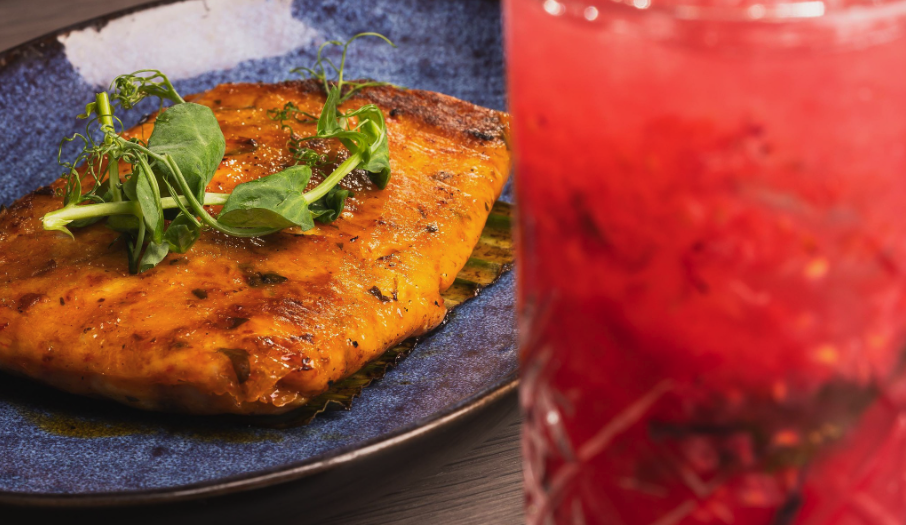
Walk into Chatterbox, and you’ll find chicken rice that feels dressed for dinner. This isn’t your average hawker fare. It's where street food gets a little polish—and somehow still feels like home. One of the dishes that tells this story best? Otah otah.
Spicy, smoky, leaf-wrapped and full of heritage, otah otah has been passed from hand to hand across Southeast Asia, changing a little every time. But it never forgets where it came from.
Let’s talk about how otah otah became what it is today—and why it still matters.
It’s fish, but not just fish. It’s fish paste, blended with spices, coconut milk, and sometimes a little something extra—prawns, squid, even chunks of fish if you’re lucky. It’s soft and fragrant, grilled or steamed in a leaf, and usually served in strips or sticks.
Some call it otak-otak. Some just say otah. Either way, it’s comfort food. The kind of thing you’d grab at a night market, or unwrap at breakfast before school.
The name? “Otak” means brain in Malay. Odd, but it refers to the soft texture, not the ingredients. Rest easy.
Nobody wrote it down, but food like this always has a past. Most agree it started somewhere in Indonesia or Malaysia, maybe even both at once. It was likely a practical solution—grind up leftover fish, mix in chillies and herbs, and wrap it in banana leaves to cook.
Simple idea. Big flavour.
As people moved across islands, up the peninsula, the recipe followed. With every stop, it picked up something new.
Otah otah wears different coats depending on where it’s made. You’ll find subtle differences in taste, texture, colour, and even the way it’s cooked.
Here, it’s usually grilled. Paler than the Malaysian version, and milder. Sold by street vendors alongside satay, often with a side of peanut sauce. It’s less about heat, more about the fish.
Muar is famous for it. Long, red strips cooked over open flames. Super spicy. The kind of thing you eat with one hand while waving away the smoke with the other. Penang does a softer, custardy take—more coconut and more herbs, often served in small leaf bowls.
Singapore’s otah is creamy. It’s spicy, but smooth. Often wrapped in coconut leaves instead of banana. Some places add prawns or lard for a little extra bite. You’ll find it as a side dish, in buns, or wedged between slices of toast.
Here, you’ll see something called hor mok. Steamed in leaf cups, topped with a swirl of coconut cream and chopped herbs. Different name, same concept. Bold paste, fragrant leaf, heat from the chillies, balance from lime and lemongrass.
Mackerel is the classic. Some regions use Spanish mackerel (tenggiri), or even snapper. The fish gets pulsed into a paste and mixed with a blend of aromatics.
There’s no fixed recipe, but the usual contributors include:
Once it’s ready, the mixture gets spooned into a leaf—banana or coconut—and either grilled or steamed. Grilling brings smoke, charring the edges just right. Steaming keeps it soft and pudding-like.
For a long time, otah otah was food for the everyday. Cheap, easy, wrapped to-go. It lived at roadside stalls, school canteens, and pasar malams.
But now? You’ll find it on restaurant menus, made with barramundi or lobster, served as starters or plated with flowers. There are otah pies, otah croissants, even otah sushi. And somehow, it works.
The ingredients haven’t changed much. What’s different is how people present it—and who gets to enjoy it. Otah’s gone from backstreet to boardroom lunch, without losing its fire.
Ask anyone who grew up eating otah, and they’ll tell you the same thing: it tastes like home. Like childhood. Like weekends spent sweating over hawker centre benches, napkins flapping in the breeze.
There’s something about that mix of spice, smoke, and coconut that hits deep. It’s a dish that reminds people where they came from—even if they’ve lived halfway around the world for years.
That’s why you’ll see frozen otah sold in supermarkets, vacuum-packed for air travel, or DIY kits shipped across borders. People don’t just want the flavour. They want the feeling.
One reason otah otah endures is that it’s flexible. The technique is simple. The ingredients are affordable. And the results are always satisfying.
Cooks in different places tweak it based on what they have. More chilli here. More coconut there. Some like it dry and chewy. Others want it silky and spoonable.
Restaurants experiment with it, too. Some stuff it into pastry. Others roll it into spring rolls or layer it in sandwiches. It’s even gone vegan in a few places—swapping fish for tofu or mushrooms.
The dish keeps moving, and it keeps changing. But the core idea stays strong.
Some foods fade over time. Otah hasn’t. It’s still everywhere. Still cheap on the street. Still celebrated in glossy cookbooks. Still grilled to order while customers queue up with umbrellas in hand.
Why? Because it does what good food always does: it satisfies, comforts and reminds.
And when done right, it still surprises you.
That’s why you’ll find otah otah at Chatterbox. Here, it’s treated with respect—not turned into something fussy, but presented with care. Wrapped, grilled, and served the way it deserves. The heat, the scent, the soft inside—it’s all there.
If you're curious to try a version that honours the past while adding just a touch of polish, it might be time to sit down and unwrap a piece. You’ll taste more than just fish and spice. You’ll taste stories carried across countries, and generations that passed down a recipe by heart.
Slice into a Mackerel & Crab Otah Otah at Chatterbox with a seat reserved here.

Opening Hours
Monday to Friday
11.30am to 4.30pm (last order at 3.45pm)
Monday to Thursday
5.30pm to 10.30pm (last order at 9.45pm)
Saturday, Sunday and Public Holiday
11am to 4.30pm (last order at 3.45pm)
Friday, Saturday and Public Holidays
5.30pm to 11pm (last order at 10pm)
Contact Details
Hilton Singapore Orchard
333 Orchard Road, #05-03
Singapore 238867
T: +65 6831 6265
M: +65 8028 3984
E: chatterbox@ouerestaurants.com


Subscribe for latest updates
Receive exclusive news access and updates