

There’s something about the smell of garlic hitting hot oil that stops you mid-step. Maybe it’s nostalgia. Maybe it’s just hunger. But whatever it is, it feels right.
In Southeast Asia, cooking doesn’t begin with measuring spoons or recipes; it begins with scent. The moment you enter the kitchen, you already know what kind of dish is coming. Savoury, sweet, bright, earthy—it’s all there in the air, carried by a handful of humble ingredients that rarely get top billing but always carry the weight.
These are the aromatics. The starting line. The invisible thread that ties so many regional dishes together.
At Chatterbox, where chicken rice is treated with the same care you’d expect from a home cook on a Sunday, aromatics aren’t reimagined or deconstructed. They’re honoured. Because they don’t need changing, they just need time, and heat, and someone who understands what they’re really for.
Garlic. Shallots. Ginger. Lemongrass. Turmeric. Galangal. Pandan. Kaffir lime. You’ll see these names over and over again in Southeast Asian recipes, but that’s not what makes them important. What makes them important is how they feel when they hit the pan, and what they whisper to the rest of the dish.
Garlic doesn’t just flavour oil; it announces dinner. Lemongrass doesn’t just perfume broth; it keeps richness in check. Pandan doesn’t just scent rice; it brings comfort, the kind you can’t quite describe but always know when it’s missing.
Each of these aromatics brings more than taste. They bring memory. And in kitchens across Singapore and beyond, they’re as essential as salt.
It almost feels silly to point out garlic and shallots. They’re everywhere. But the way they’re used in Southeast Asia is different; not just an afterthought or a seasoning, but the start.
A wok goes on the stove. Oil goes in. And then comes the garlic. You hear the sizzle before the scent even reaches your nose. Then the shallots follow; sliced thin, or pounded, or sometimes just thrown in whole, depending on who’s cooking. They soften slowly, melting into the oil, colouring it gold, leaving behind a flavour you’ll taste even if they disappear entirely into the dish.
In some homes, fried shallot oil is kept in a jar near the stove, ready to pour over rice, noodles, soup—anything that needs that final bit of depth. In others, it’s the garnish itself, scattered on top at the very end.
You don’t need a timer for these. You go by smell.
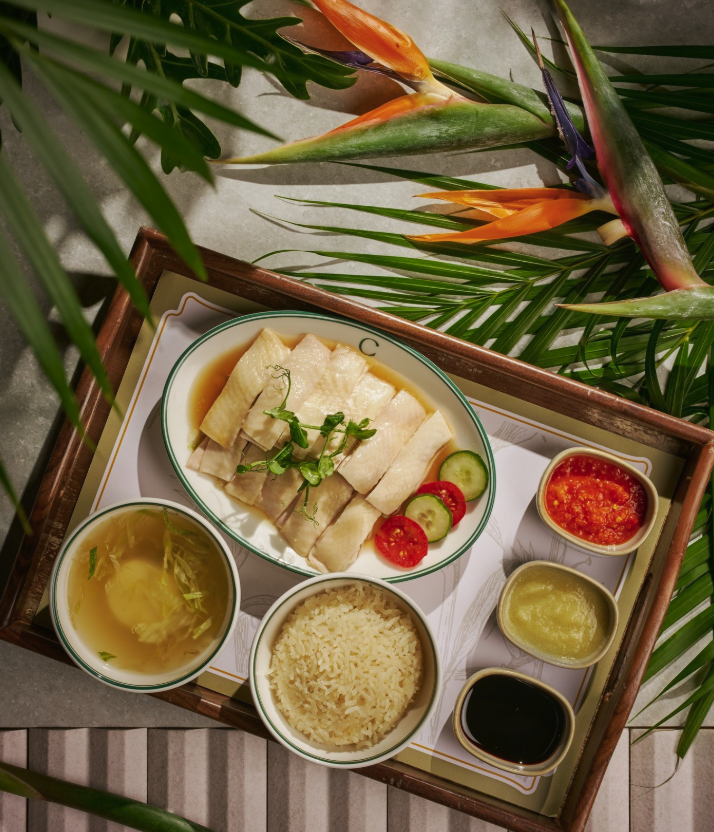
Garlic and shallots are the quiet heroes behind our signature Mandarin Chicken Rice. This is a fragrant rice dish cooked with garlic-infused oil and served alongside a clear broth that carries the same gentle sweetness of shallots. It begins the way countless home meals do, with the sound of garlic hitting the pan, and preserves that familiar aroma that signals comfort and care—proof that refinement can still begin with something as humble as a clove and a bulb.
Lemongrass gets used a lot, but it’s rarely the star. Still, you’d know if it wasn’t there. A few stalks, bruised and sliced, tossed into soup or curry; suddenly everything feels fresher, lighter. Not lemony, exactly. More like citrus with a backbone.
Galangal, on the other hand, doesn’t do subtle. It’s firmer than ginger and spicier too. It brings a sharp, piney note that cuts through the fat in coconut milk-based dishes like laksa lemak. And no, you don’t usually eat it. It’s there to leave its mark, then get out of the way.
These two often show up together, but they don’t compete. Lemongrass lifts. Galangal grounds. Used right, they balance each other out perfectly.
You’ll find lemongrass and galangal quietly supporting acts like the Mackerel & Crab Otah-Otah, grilled in banana leaf to seal in that fragrant base of coconut, spice, and lemongrass. They also form the backbone of many of Chatterbox’s sauces and curries. This helps our creations stay true to Southeast Asia’s core flavours, even amidst a refined setting.
If lemongrass and galangal are the top notes, ginger and turmeric are the body.
Ginger is flexible. Add it early, and it softens into the background. Add it late and it bites. You’ll find it sliced in broths, minced in sauces, blended into pastes. It’s in chicken rice, yes, but also in bak kut teh, teh halia, and more.
Turmeric is less forgiving, but worth it. Fresh turmeric has a depth that powder just can’t match. Earthy, slightly bitter, slightly floral. You don’t need much. But what it does to a curry or even just a pot of rice is undeniable. It stains everything, including your fingers, but no one ever minds.
In Indonesian and Malay cooking, it’s often used. But not for colour alone. It changes the structure of a dish, making it feel fuller, rounder.
You’ll find these roots in more than just familiar favourites. The Long Bean Ikan Kerabu, a Malay-style salad, uses turmeric leaves to lend a subtle earthiness and warmth beneath its bright, tangy dressing. On the other hand, the Peanut Glutinous Rice Balls in sweet ginger broth turn ginger’s heat into comfort, closing a meal the same way it begins: with fragrance. One a salad and another a dessert, both dishes show how Chatterbox carries local tradition across every course.
Some aromatics don’t speak loudly. Pandan, for instance, almost never shows up on its own. But tuck a knotted leaf into a pot of rice, or steep it in coconut milk for dessert, and suddenly everything smells like home.
It’s grassy, sweet, and nostalgic. Not because of any specific taste, but because it’s always been there.
Kaffir lime leaves go the other way. Bright, sharp, almost aggressive if you use too many. But just a few, torn roughly and stirred into soup or curry, and the whole dish lifts. It doesn’t taste like lime juice; it’s more floral than that. More perfumed.
You don’t eat them, usually. You just let them work.
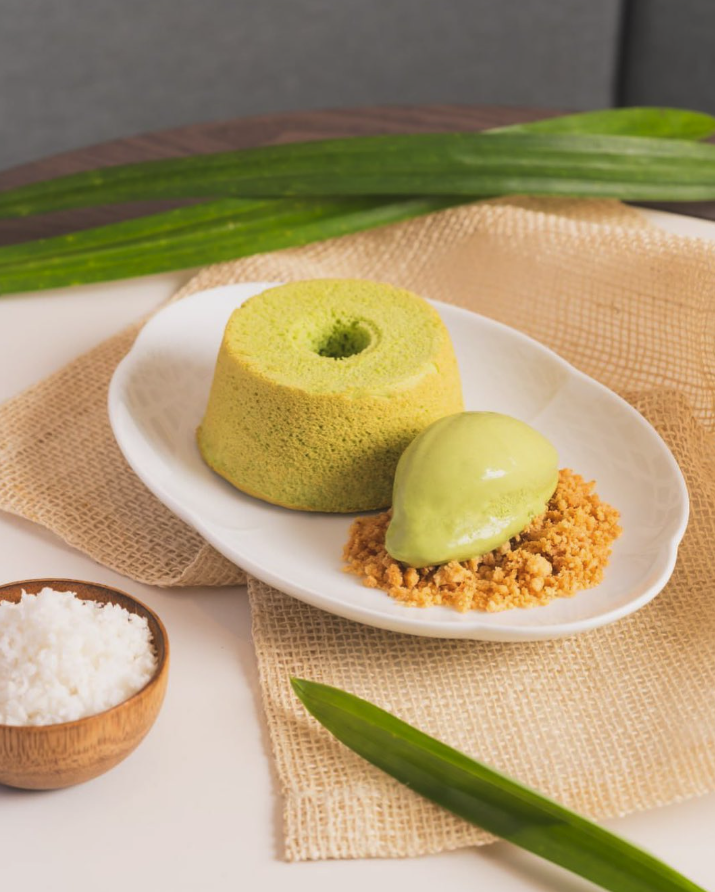
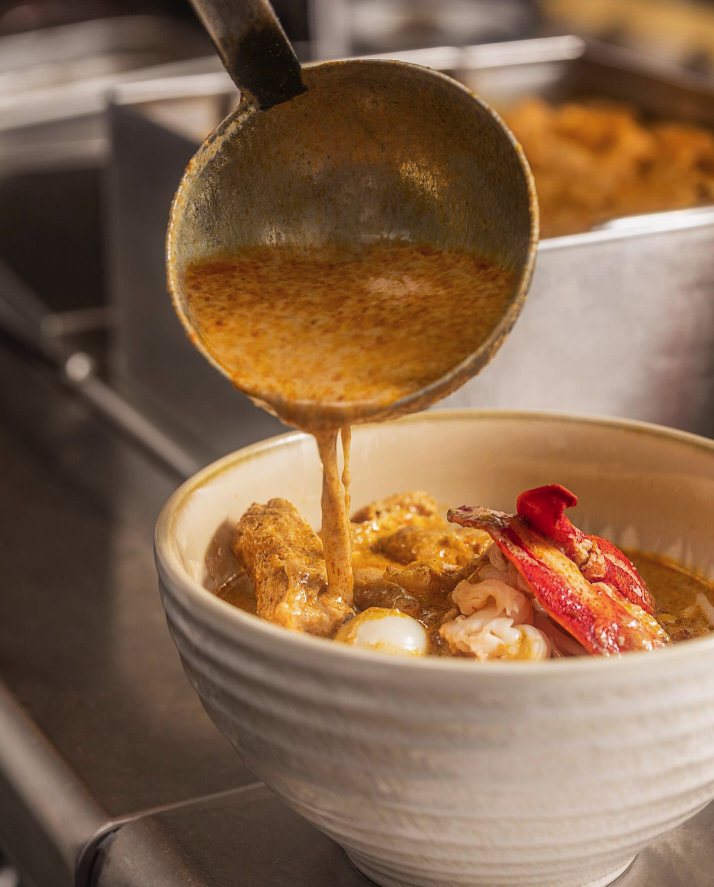
Pandan makes its gentle mark in our beloved Pandan Cake and Gelato, where fresh pandan juice colours the sponge and scents the dessert with a tropical sweetness that’s brought to the fore with homemade soy pandan gelato. Kaffir lime leaves, meanwhile, find their way into savoury highlights like the Lobster Laksa, bringing a bright, floral edge that keeps the rich broth lively.
It’s not just what you use. It’s how you use it.
In many Southeast Asian dishes, aromatics aren’t chopped; they’re pounded. Not because it’s old-school, but because pounding releases oils that slicing can’t. That mortar and pestle in your grandmother’s kitchen? It wasn’t just for show.
Aromatics are also layered. Garlic and shallots often go in first, fried gently until they soften. Then come the roots, turmeric, and ginger, given time to bloom. Leaves like pandan or lime get added last, so they don’t fade away.
Some get strained out. Some stay in. You don’t need rules, but you do need to pay attention.
Across the region, the same aromatics show up in different ways. Garlic in Filipino adobo tastes nothing like garlic in Thai stir-fry. Lemongrass in Vietnamese grilled pork feels different from lemongrass in Malaysian nasi ulam. Turmeric in Burmese fish curry is a whole different story.
And yet, they all start the same way. On a chopping board. In a mortar. In someone’s hands.
There’s no universal method. Just instinct, passed down through families, shaped by memory, adjusted by taste.
If you’re cooking at home and want to use aromatics well, you don’t need to get everything right. Just slow down.
Buy fresh if you can. Smell the lemongrass before you chop it. Don’t be afraid to use your hands; bruise leaves, tear herbs, pound roots. Taste as you go. If the oil smells amazing before you add anything else, you’re doing fine.
You won’t find garlic foam or deconstructed lemongrass at Chatterbox. What you’ll find is hor fun that starts with minced garlic. Rice scented with pandan. A broth that smells like home.
That’s the heart of it. Not reinvention. Just respect.
Because in the end, great cooking isn’t about what’s trendy. It’s about what lasts. And in Southeast Asia, what lasts always starts with the scent of something simple, frying gently in a warm pan.

Opening Hours
Monday to Friday
11.30am to 4.30pm (last order at 3.45pm)
Monday to Thursday
5.30pm to 10.30pm (last order at 9.45pm)
Saturday, Sunday and Public Holiday
11am to 4.30pm (last order at 3.45pm)
Friday, Saturday and Public Holidays
5.30pm to 11pm (last order at 10pm)
Contact Details
Hilton Singapore Orchard
333 Orchard Road, #05-03
Singapore 238867
T: +65 6831 6265
M: +65 8028 3984
E: chatterbox@ouerestaurants.com


Subscribe for latest updates
Receive exclusive news access and updates